
Having Children After Breast Cancer Treatment
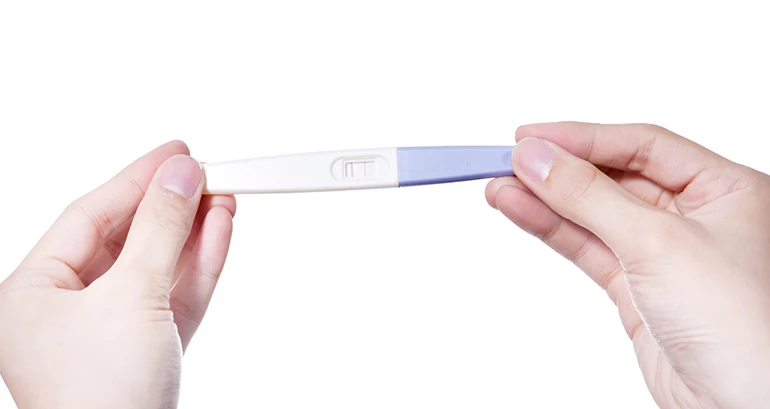
If your healthcare team did not speak to you about fertility preservation, or if you did not take steps to preserve your fertility before breast cancer breast cancer treatment, you may still be able to conceive a child naturally. There are also other meaningful options for having children after breast cancer, like adopting a child or using a gestational carrier.
Your age, the condition of your eggs and other reproductive and treatment-related factors combine to affect your fertility after breast cancer. Recent research shows that among young adults who attempted pregnancy after breast cancer treatment, a large percentage successfully became pregnant, with most achieving a live birth.
A visit to a reproductive endocrinologist can provide information on your fertility options, such as in vitro fertilization (IVF), where your eggs are retrieved, fertilized outside your body and later transferred back to your uterus where a fetus can develop. For those with hormone receptor-positive breast cancer who need to pause endocrine therapy to attempt pregnancy, studies show this can be done safely without increasing recurrence risk. Additionally, fertility preservation techniques and assisted reproductive technologies (ART) do not appear to increase cancer recurrence risk.
If your doctor determines that you are infertile, there are several other options for motherhood, including:
Egg Donation
If your eggs have been damaged and are not viable to conceive a child, you may be able to use eggs donated by another woman. These eggs would be fertilized outside your body and transferred to your uterus, as with the IVF process.
Surrogate/Gestational Carrier
If you are physically unable to carry a child full-term, or it would pose too great a health risk, you may be able to have another woman carry and deliver a child for you. A gestational carrier has no genetic connection to the child—embryos created from your eggs (or donor eggs) and sperm are transferred to her uterus. The gestational carrier can be a friend, family member, or someone you work with through an agency.
Note: Traditional surrogacy, where a woman uses her own eggs and is artificially inseminated, is much less commonly practiced and is illegal in some states. Most programs work exclusively with gestational carriers.
They are called a surrogate if sperm is injected into them (artificial insemination) and a gestational carrier if an embryo is implanted.
Adoption
Adoption is the legal transfer of parental rights over a child from the birth parent to another. While it is possible for cancer survivors to adopt, there may be additional requirements such as providing your medical records or waiting a certain period of time after your cancer diagnosis before being allowed to adopt.
Most agencies require cancer survivors to be in remission for 2-5 years, though requirements vary by agency and adoption type. International adoptions often have stricter health documentation requirements. Many birth parents view cancer survivors positively, appreciating their resilience and perspective on life.
Laws on frozen eggs and embryos, donated eggs, gestational carriers and adoption vary from state to state. Be sure to consult your doctor to determine what fertility options will be safest for you or a family attorney to discuss adoption options.
Having children after breast cancer is not impossible! Find family planning and adoption resources in our ResourceLink database.