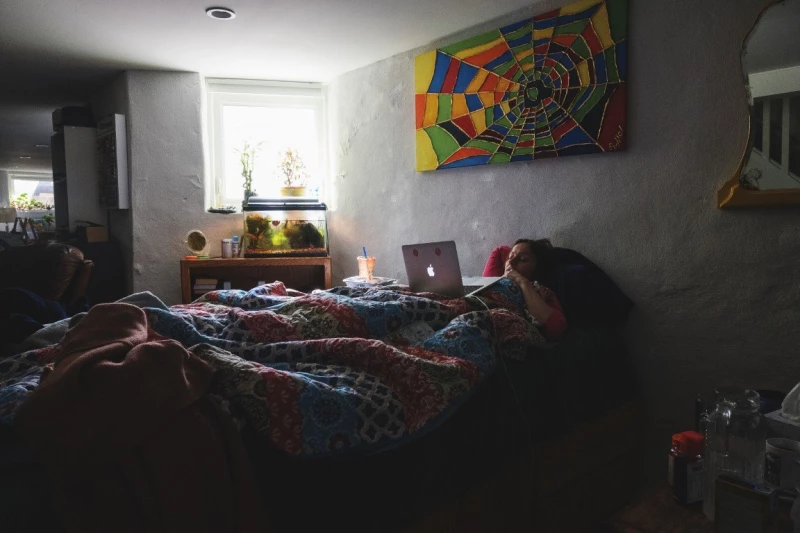
Networking for Women Living with Metastatic Disease

YSC’s MetsLink Support Group Calls, designed to address the specific concerns of young women diagnosed with metastatic breast cancer, draw participants from every walk of life. Some of the women are single, others are married, some work, others may collect some sort of disability benefits. The ages of the women who participate range from those in their early 20s on up. Topics include, but are not limited to hopes and fears, work, children, communicating with friends and family and living with ongoing and changing treatment.

In my more than four years of facilitating these monthly support group calls, women from all over the U.S. and Canada have joined the calls. Despite the obvious social and geographical differences, it’s always extremely interesting and educational to hear how women from various medical settings are being treated for their metastatic disease. Though there is a large arsenal of medications for the treatment of breast cancer, women do not follow an obvious schedule of treatments. Those that are hormone sensitive may start with an oral anti-estrogen medication, while others may decide to enroll in a clinical trial which utilizes intravenous (IV) chemotherapies or targeted drugs. Still others start with a standard IV chemotherapy. While on the call, we spend time listening to which treatments the participants are receiving and discussing side effects and their management of these. Great suggestions have been exchanged, while anxieties are lessened as the women hear that their physical issues have been, or are being, experienced by others.

A common denominator for each call is the need for participants to feel as if they are part of the group, as many of our callers have never spoken to another woman with metastatic breast cancer prior to joining this “support group without leaving home.” Though we don’t see one another as we do in face to face groups, what’s always astounded me is the kindness and generosity shared by virtual strangers on these calls. Women are eager to talk to each other, hear one another’s story and offer compassionate words.

Questions are always encouraged and many focus on ways to cope with disclosing information to family, friends or employers, as well as managing anxiety before a scan. We’ve discussed complementary therapies like acupuncture, supplements and yoga. The “roller coaster ride” of having a chronic illness with ups and downs always elicits conversations about managing a variety of emotions that come with each day. Women talk about the multiple stressors they experience with this diagnosis including disappointment with loved ones, body image issues, intimacy, role changes, challenges to relationships and managing the sense of uncertainty.

As a clinical social worker in a large urban cancer center, I enjoy these monthly calls enormously and find the group often runs itself. Participants appreciate the opportunity to come together, many of whom choose to join our calls month after month. When a woman is able to hear she is not alone and her feelings are shared by others, the sense of community widens and her stress might seem more manageable. Women frequently exchange contact information and resources. Though there is often a sense that there are many women out there who feel isolated, I’m comforted by the thought that, one-by-one, we’re reaching out and making a difference with our MetsLink networking calls.


Upcoming Calls:
August 14 – 8:00 p.m. ET
Sept ember 11 – 8:00 p.m. ET
October 9 – 8:00 p.m. ET
Nov ember 13 – 8:00 p.m. ET
December 11 – 8:00 p.m. ET

National call-in number: 800.804.6968
International call-in number: 647.723.7260
Access code: 0284559

Leave a comment
Categories: Guest Bloggers

What Do Mammography Guidelines Mean for You?

As women, we are inundated with new information on healthy living and disease prevention. We take this all in, but may still be asking: What vitamins should I take? How often should I floss? Does that new mole look strange? And, as we all know, our breast health is no different. You’ve probably heard that you should do a self breast exam monthly and talk to your doctor about annual mammograms when you turn 40, if not earlier. The medical profession followed those guidelines for years because, after all, isn’t early detection the key to cancer prevention?

It’s no surprise then that the U.S. Preventive Services Task Force* (USPSTF) 2009 report on mammography screening caused quite a stir and a lot of confusion. Based on its review of the most current research, the panel revised previous guidelines so that mammograms are now recommended every two years beginning at age 50 for women of average risk. It also questioned the efficacy of doctors showing women how to perform self-breast exams as a method of early detection.

While the USPSTF recommendations on screening mammography, clinical breast exam and self-examination do not directly impact the young breast cancer survivors served by Young Survival Coalition (YSC), we always carefully review recommendations of such significance. Although mammograms are not perfect and often produce false positives in young women, the evidence has clearly shown that they are effective in older women and should be available for all women for whom such screening is appropriate. Further, the Task Force’s recommendations deal only with average-risk women, not screening in higher-risk women and looking at residual breast tissue of young and old survivors.

As for YSC’s population of young women, the debate reminds us that better screening tools are urgently needed for all risk levels. Mammograms have been found to be an ineffective screening mechanism for women under 40 because their breast tissue is dense. And while over 13,000 women under 40¹ in the United States will be diagnosed with breast cancer this year, there is still no effective screening method for early detection of breast cancer in young women. Survival rates for young women diagnosed with breast cancer are significantly lower than for their older counterparts, and the disease is often detected at later stages and is usually more aggressive.

Taking all of that into consideration, medical professionals, researchers and advocates remain frustrated by early detection of breast cancer for all women and specifically those under 40. Accordingly, YSC urges young women to do what YOU can to become familiar with your breasts and bodies. Know your own personal risk factors for breast cancer, be aware of the signs of breast malignancies and promptly consult with your health provider if you have any health concerns. You are your own best advocate!

¹American Cancer Society, Surveillance Research 2011.
*The USPSTF is a panel of independent experts who analyze the most current research on evidence-based prevention and establish guidelines based on this review: http://www.ahrq.gov/clinic/uspstfix.htm.
Leave a comment
Categories: Guest Bloggers

We Are Part of a Larger Community

There are over a quarter of a million women living in the United States today who were diagnosed with breast cancer before their 41st birthday. This is a lot of young women who have heard the words, “You have breast cancer,” way before they ever thought they could get it. However, when you consider ALL cancers according to Surveillance, Epidemiology, and End Results (SEER) data put out by the National Cancer Institute (NCI), it is estimated that more than 1.6 million people will be diagnosed with cancer in one year, and of that awful total, 9.2% will be under the age of 44. Meaning around 150,000 young adults and kids will be diagnosed with cancer in one year! This just plain sucks!

The point is, while YSC is a very special community just for women who are (or were) diagnosed with breast cancer before their 41st birthday, a larger young adult cancer community exists and we all work together to support each other as we learn to live with cancer.

While the challenges that come with facing a breast cancer diagnosis might be different, the issues around nutrition, careers, insurance and fertility are felt by all young adults no matter what type of cancer they are diagnosed with.

As a young survivor myself, I’ve learned a great deal from this larger young adult cancer community, since being diagnosed two years ago. I consider myself a part of the Stupid Cancer family and have learned so much from this amazing group of young survivors across the country. I attended the OMG! Cancer Summit for Young Adults this past spring in Las Vegas and was reminded how much we all have in common as we struggle to find our “new normal.”

For those of you who live on the East Coast, Stupid Cancer is hosting OMG2012/east, a smaller, one-day conference in New York City on September 15. It’s free for all young survivors but space is limited, so if you are interested in taking an active role in our larger young adult oncology community, this is a wonderful way to be reminded that you are not alone (which we all need every once in a while!). There are a lot of us out there striving to survive with style, determination, strength and even a sense of humor.

If you are planning to attend the OMG2012/east, please shoot me an email with your mailing address, so we can send you a YSC pin to wear so you can represent all the young women with breast cancer in our community!

YSC is about ensuring that all young women diagnosed with breast cancer are empowered, educated, and supported throughout every phase of their experience. I believe that in order to do this properly, I have a responsibility to encourage everyone that wishes to be a part of the overall young adult cancer community to do so.

We are all in this together, as we try each and every day to define and navigate our “new normal.”

Leave a comment

You Want Me to Eat THAT???!!!

“What in the world are we supposed to eat while we train to ride 200 miles?” I’ve heard this question time and again from the many women I know who are doing Tour de Pink for the first time to take their bodies back from cancer.

I had the unfortunate experience of learning what it felt like to have my body run out of fuel on a bike ride recently. This experience is often referred to by cyclists as “bonking” or “hitting a wall.” No matter what cute name you give it – it sucks.

So, this is how I understand it: We are supposed to eat a big breakfast before we go on a long ride, which is counter-intuitive from everything we were taught as kids. Remember having to sit by the pool and wait an hour after eating lunch? And now they’re telling me I’m supposed to eat a large meal before I exercise … Ok, strange, but I’ll go with it.

You are also supposed to eat EVERY HOUR. Deciding to eat every hour would be fine with me if I could stop and enjoy a nice meal. But that’s NOT what this means. You are supposed to eat something WHILE you are riding, every hour. Very different.
Again, it really contradicts everything we learned as children. But, I don’t want to repeat myself.

I’ve also found that everyone seems to have a different magical food choice for these on-the-go meals. Some people keep it real with a granola bar they keep in their jersey pocket. Other people go to the extreme with this substance called GU. It comes in a pouch and has the consistency of slime – and you’re supposed to eat it willingly every hour.
I’ve been told that after a long ride you should eat protein and drink a lot of water. I understand a beer is also fine since it has calories, which makes me happy.

Back to my unfortunate experience of learning the hard way the importance of keeping your body fueled …. I “bonked” on a 30-mile ride and, thank God, was surrounded by experienced riders. I had no idea what was happening to me … the next thing I knew they were shoving this GU stuff down my throat. I wasn’t happy at first, but then I felt my senses starting to come back. I thanked the owner of the GU for sharing his magical jello shot with me.

My plan is to try the GU Chomps since the chomps seem to be more like eating gummy bears (more my style) … and maybe a granola bar … ‘cause going old school is just more fun sometimes.

Any other ideas on fuel for us newbie cyclists?

Comments (3)
Categories: Taking my Body Back

A Letter to Family & Friends About My Journey – Part II

Pink EelephantThe following is the second of four letters that I wrote to my friends and family immediately following my breast cancer diagnosis and surgery:

Letter # 2
October 25, 2010
A letter to my friends and family

Please forgive the long lapse since my last update. Life seems to be happening so profoundly fast these days that I lost track of time. Blame it on the pink elephant!

A special thank you to all of you who have emailed, called, texted and written to check in during the past month. It is your continual support and love that makes every day that much easier. Each day I feel as if I am taking each step with you all cheering “YOU CAN DO IT … KEEP GOING!” Some days the steps are tall and steep and all of you together raise me up so I can reach each step and keep going. Thank you from the bottom of my heart.

During the past two months I have been faced with challenges, fears and emotions that I didn’t expect. But with each step, something profound always appears that takes my breath away – right in the midst of the chaos. Some blessings or occurrences I might have otherwise missed. Here are a few:

•    I’ll never forget my mother sitting next to me in bed talking to me for hours and hours over the last six weeks … it’s become one of my favorite parts of this journey.
•    The generosity of total strangers that has shocked me day after day – bringing me to tears of happiness and restoring my faith in humanity (too many acts of kindness to list them all).
•    The strong and magnificent breast cancer survivors I’ve met who give me hope and fill me with strength – these women are my true angels.

On the morning of October 7, (2010), I went in for my second (and unexpected) surgery to remove seven more lymph nodes from under my right arm. After only 48 hours of being surgical drain free, I was home with another surgical drain (ugh!), more stitches, and back in bed – with a 400-pound pink elephant sleeping comfortably on my chest.

A week later we happily learned that all seven lymph nodes came up negative for cancer!!! Yahooooo! We also learned I was negative for the BRCA gene mutation, which meant my mother and I being diagnosed seven months apart doesn’t appear to be caused by a genetic mutation (well, at least one that’s currently been identified). Go figure!

So what is next for my pink elephant and I??? Are we done??? Unfortunately it does not appear so.

Since two of the lymph nodes from my first surgery tested positive for cancer, I have to begin a “treatment regimen” to ensure that (1) the cancer has not spread to other parts of my body and (2) that it never comes back! Yes, it means the other “C word” … CHEMO!!!!

I think chemotherapy is almost as feared and misunderstood as the word cancer. So, over the last two weeks I have been educating myself and gained a basic understanding of what is ahead of me. I met with one oncologist (doctor who determines and manages your “treatment” from start to finish) and am meeting with another one next week, for a second opinion. My guess is that sometime around the end of November I will begin chemo … but this won’t be settled for another week or so.

Overall I am doing fine. Healing nicely and getting stronger every day. Jeff and my parents continue to be rocks of encouragement, love and support, which I’d be lost without. I’m not going to lie – some days are really rough – but who in life doesn’t have tough days?

So, that’s the update. No final plan as of yet, but it’s coming together. My pink elephant and I continue to dance together every day – sometimes she leads, sometimes I do – but we have bonded and will continue to move forward.

I’m not sure where this road will lead me, and in all honesty I am still trying to figure out how I even ended up on this road in the first place … but your road is your road, and life is about turning lemons into lemonade … all while carrying a 400-pound pink elephant.

Love,
Jen

Comment (1)
Categories: Survivor SYNC